
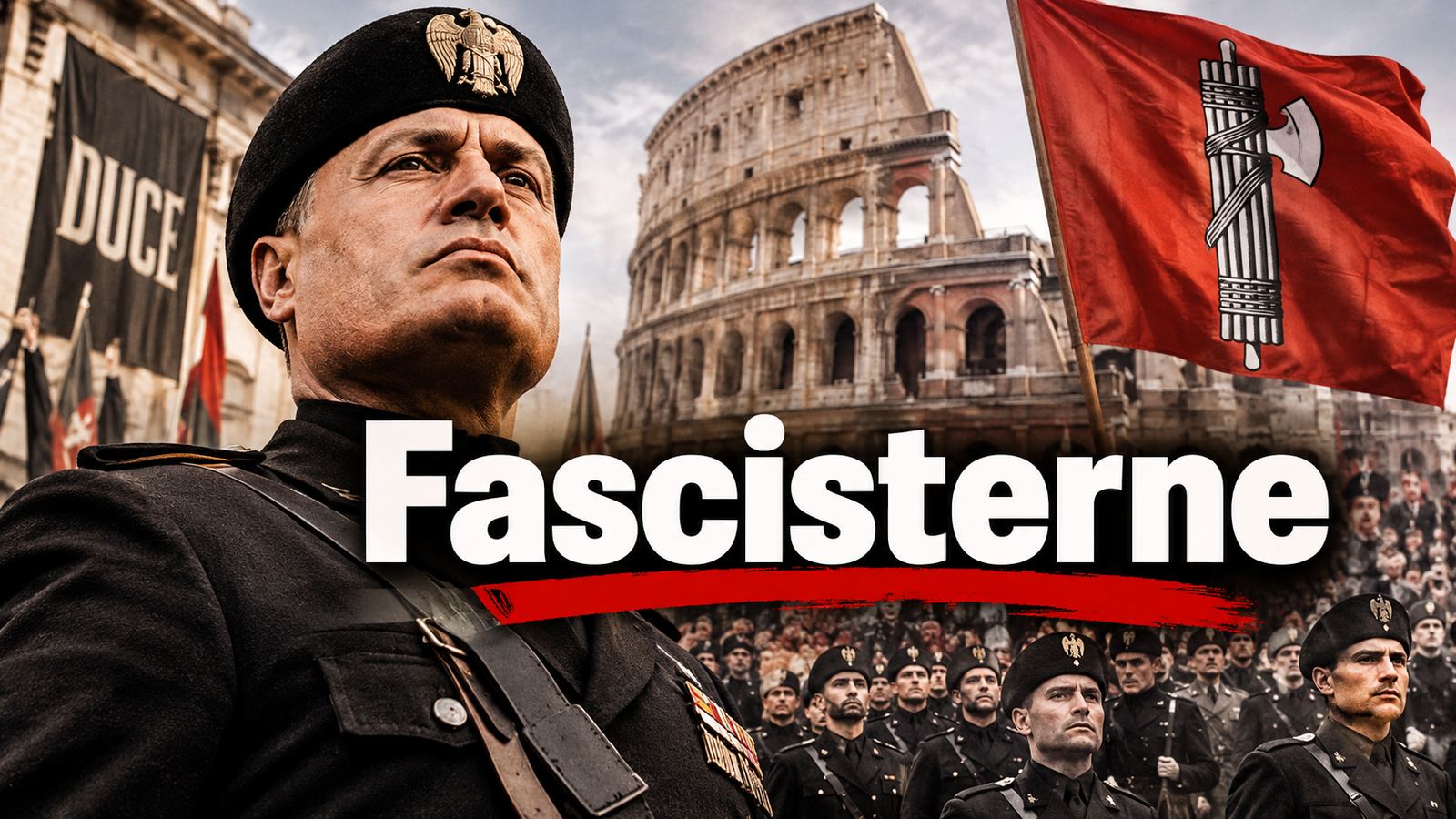
Fascisterne is a Danish word meaning “the fascists” in English. It refers to people who support or belong to fascist political movements. The word is the definite plural form of fascist and is commonly associated with discussions of European political history, authoritarian governments, nationalism, and the rise of fascism during the twentieth century.
Understanding Fascisterne requires looking beyond its translation. The term connects to a political ideology that influenced several European countries, particularly Italy and Germany, during the period between the First and Second World Wars. Its historical significance also helps explain why fascism remains an important subject in discussions about democracy, political freedom, and human rights.
What Does Fascisterne Mean?
Fascisterne is a Danish noun that translates directly into English as “the fascists.” It describes a specific group of people identified as supporters of fascism.
The word comes from the Danish noun fascist, with the ending -erne indicating the definite plural form.
The related Danish terms have different meanings:
- Fascist: A fascist.
- Fascisten: The fascist.
- Fascister: Fascists.
- Fascisterne: The fascists.
- Fascisme: Fascism.
This grammatical distinction is important when translating Danish historical documents, political discussions, or academic writing.
Fascisterne is not the official name of a particular political party or organization. Its meaning depends on the people and historical events being discussed.
Understanding the Origins of Fascism
Fascism developed in Europe following the First World War. Political instability, economic difficulties, social divisions, and dissatisfaction with existing governments created conditions in which authoritarian movements could attract support.
Italy became the birthplace of modern fascism. Its emergence was closely connected to Benito Mussolini, who established the Fasci Italiani di Combattimento in Milan on March 23, 1919.
Mussolini promoted an ideology based on extreme nationalism, centralized authority, political discipline, and opposition to liberal democracy and socialism.
His movement gradually expanded its political influence through propaganda, organized violence, and alliances with influential groups.
The March on Rome in October 1922 helped Mussolini become prime minister. Over the following years, he dismantled democratic institutions and established a dictatorship.
These developments established fascism as a major political force in twentieth-century European history.
The Main Characteristics of Fascisterne
Although fascist movements differed between countries, several ideological characteristics appeared repeatedly.
Extreme Nationalism
Fascist movements placed the nation above individual interests. They promoted national unity, national strength, and loyalty to the state.
Their political messaging often presented the nation as threatened by internal enemies, foreign powers, or minority groups.
Authoritarian Leadership
Fascist governments concentrated political authority in a powerful leader and restricted opposition.
Leaders were frequently presented as national figures whose decisions should not be challenged.
This approach weakened democratic accountability and reduced opportunities for political participation.
Opposition to Democracy
Fascism rejected important principles of liberal democracy, including political pluralism, independent opposition, and competitive elections.
Fascist governments frequently censored newspapers, restricted political organizations, and used state institutions to suppress critics.
Political Violence
Violence played an important role in the development and maintenance of several historical fascist movements.
Paramilitary organizations attacked political opponents, intimidated communities, and helped authoritarian leaders consolidate power.
Propaganda and Mass Mobilization
Fascist movements used speeches, newspapers, posters, public ceremonies, and organized rallies to spread their political messages.
Propaganda encouraged loyalty to national leaders and portrayed political opponents as dangerous enemies.
These methods helped fascist organizations influence public opinion and strengthen their political presence.
Fascisterne in European History
Fascist movements appeared in several European countries during the twentieth century. However, their political influence, organizational structures, and ideological priorities were not identical.
Italian Fascists
Italy, 1919 onwards
Italian fascism developed under Benito Mussolini and became the first major fascist movement to establish a national dictatorship.
Mussolini promoted authoritarian nationalism, military expansion, and the idea that the state should control important aspects of national life.
His government participated in aggressive foreign policies and formed an alliance with Nazi Germany during the Second World War.
The Italian fascist regime collapsed in 1943, although Mussolini subsequently led the German-supported Italian Social Republic until 1945.
German Nazis
Germany, 1920s to 1945
Nazism, led by Adolf Hitler, is generally understood as a German variant of fascism.
The Nazi Party combined authoritarian nationalism with an especially extreme racial ideology, antisemitism, and territorial expansionism.
After Hitler became chancellor in 1933, the Nazi government destroyed democratic institutions and established a totalitarian dictatorship.
Its policies resulted in the Holocaust, during which approximately six million Jews were murdered, alongside the persecution and mass murder of millions of other victims.
Although Italian fascism and German Nazism shared important characteristics, their ideologies were not identical.
Fascist Movements in Other European Countries
Fascist-inspired organizations also developed in countries including Spain, Romania, Austria, and Britain.
Examples included the Spanish Falange, Romania’s Iron Guard, and the British Union of Fascists.
These movements adapted fascist ideas to their national political environments. Some gained considerable influence, while others remained relatively small.
Fascisterne and Denmark’s Historical Background
The word Fascisterne has particular relevance when studying Danish political and historical developments.
During the interwar period, Denmark experienced the emergence of fascist-inspired political organizations. However, these movements did not achieve the same political influence as their counterparts in Italy and Germany.
One important organization was Danmarks Nationalsocialistiske Arbejderparti, commonly known as DNSAP.
The Danish Nazi Party
DNSAP was established in 1930 and followed many political ideas and organizational practices associated with Adolf Hitler’s Nazi Party.
Its ideology included authoritarian nationalism, antisemitism, and opposition to parliamentary democracy.
The organization remained electorally marginal in Denmark, despite its attempts to expand its political influence.
During the German occupation of Denmark, which began on April 9, 1940, DNSAP supported Nazi Germany.
The party never became the governing authority of Denmark during the occupation.
This distinction is important because Danish fascist and Nazi organizations operated within a political environment that remained different from the dictatorships established elsewhere in Europe.
Why Danish Fascism Remained Limited
Several historical and political factors help explain why fascist movements failed to achieve comparable success in Denmark.
Denmark had established parliamentary institutions, organized political parties, and a strong tradition of political compromise.
Its democratic system provided an alternative to the authoritarian political movements gaining influence elsewhere.
Although fascist organizations attracted some supporters, they did not secure the political power necessary to establish a fascist dictatorship.
The Difference Between Fascism and Nazism
Fascism and Nazism are closely related political ideologies, but they should not be treated as completely interchangeable terms.
Fascism originated in Italy under Mussolini and emphasized extreme nationalism, authoritarian government, national unity, and the suppression of political opposition.
Nazism developed in Germany under Hitler. It shared many fascist characteristics but placed particularly strong emphasis on biological racism, antisemitism, racial hierarchy, and territorial expansion.
The Holocaust represents one of the most devastating consequences of Nazi racial ideology.
Understanding these differences makes historical discussions more accurate and prevents the oversimplification of European political movements.
What Happened to Fascisterne After the Second World War?
The defeat of Nazi Germany and Fascist Italy in 1945 dramatically changed Europe’s political landscape.
Fascist governments collapsed, leading organizations were dissolved, and several prominent political figures faced prosecution for war crimes and other crimes.
The Nuremberg Trials prosecuted major Nazi leaders for crimes against peace, war crimes, and crimes against humanity.
In Italy, Mussolini’s dictatorship ended during the final stages of the war, and the country subsequently developed a democratic political system.
However, fascist ideas did not disappear completely.
Some postwar political organizations maintained connections with earlier fascist traditions, while other movements adopted selected elements of fascist ideology.
The historical legacy of fascism also influenced European discussions about constitutional protections, political extremism, minority rights, and democratic institutions.
Why Fascisterne Remains Relevant Today
Fascisterne remains a meaningful term in historical research, political discussions, and educational writing.
Understanding the historical meaning of fascism helps readers recognize the political developments that contributed to authoritarian governments during the twentieth century.
Historical Education
Studying fascist movements provides important lessons about political extremism, propaganda, discrimination, and the destruction of democratic institutions.
Historical knowledge also helps explain the origins of the Second World War and the consequences of totalitarian government.
Democracy and Political Freedom
The history of fascism demonstrates how democratic institutions can become vulnerable when political opposition is suppressed and government authority becomes concentrated.
Independent journalism, fair elections, civil liberties, and accountable institutions are important elements of democratic societies.
Responsible Political Language
The term fascist is sometimes used in modern political debates as an accusation against opponents.
However, not every authoritarian policy or nationalist political movement automatically qualifies as fascism.
Historians and political researchers examine ideology, political organization, attitudes toward violence, leadership structures, and relationships with democratic institutions before applying the classification.
Using the term accurately helps maintain meaningful political and historical discussions.
Frequently Asked Questions About Fascisterne
What does Fascisterne mean in English?
Fascisterne is a Danish word meaning “the fascists.” It refers to people identified as supporters or members of fascist political movements. Its grammatical form is definite plural.
Is Fascisterne the name of a political organization?
No. Fascisterne is an ordinary Danish noun rather than the official name of a political organization. The specific group it describes depends on the surrounding historical or political context.
Where did fascism originally begin?
Modern fascism emerged in Italy after the First World War. Benito Mussolini established the Fasci Italiani di Combattimento in Milan on March 23, 1919, creating the foundation for the Italian fascist movement.
Are fascism and Nazism the same thing?
No. Nazism is generally considered a German variant of fascism, but it developed distinctive racial and antisemitic doctrines. Both ideologies promoted authoritarian government and extreme nationalism.
Did Denmark have fascist political movements?
Yes. Denmark had several fascist-inspired organizations, including DNSAP, which was established in 1930. However, these movements never achieved the same level of political power as fascist organizations in Italy or Nazi Germany.
Why is Fascisterne still discussed today?
The term remains relevant because fascism is an important subject in European history and political studies. Understanding its development helps explain authoritarianism, political violence, propaganda, and threats to democratic institutions.
Conclusion
Fascisterne is the Danish definite plural form of fascist, meaning “the fascists.” Although the word itself is straightforward, its historical significance connects to one of the most influential and destructive political movements of the twentieth century.
From Mussolini’s rise in Italy to Hitler’s dictatorship in Germany and the development of smaller movements across Europe, fascism transformed political systems and affected millions of lives.
Understanding the meaning of Fascisterne, its historical background, and its relationship with fascism and Nazism provides valuable context for studying European history and recognizing the importance of democracy, political freedom, and human rights.
Also read: FlowXD
