
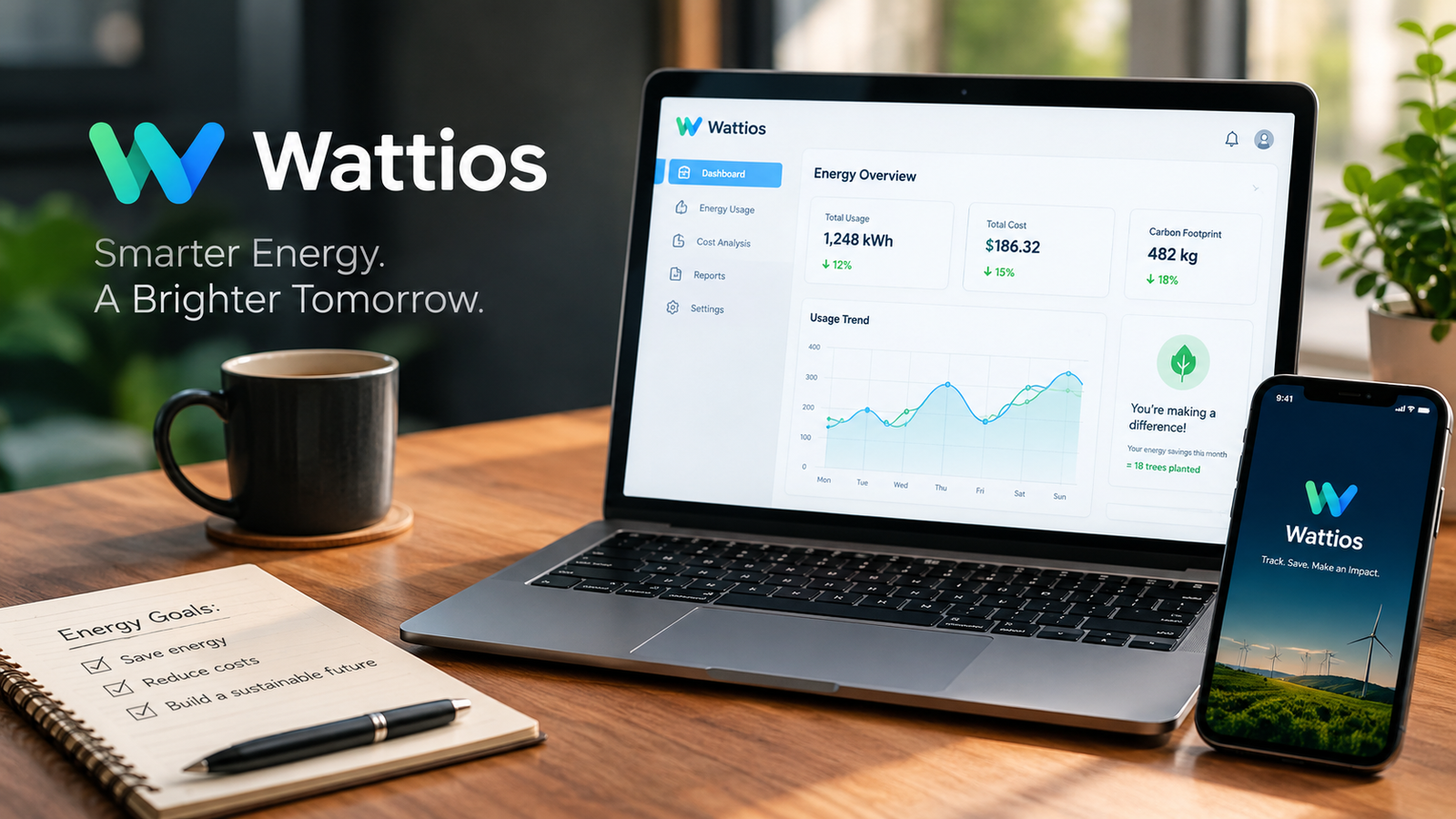
attios is a term associated with watts, electrical power, and energy consumption. It may also appear as a business or brand name, depending on the context. However, Wattios is not a separate, internationally recognized unit of electrical measurement. The standard scientific unit of power is the watt, represented by the symbol W.
Understanding Wattios can help readers explore electricity usage, appliance power ratings, energy efficiency, and ways to manage household electricity costs. It is important to distinguish the term’s historical linguistic meaning from commercial services that may use it as a name.
What Does Wattios Mean?
Wattios is an older Spanish-language spelling associated with the word watt. In modern Spanish, the standard terms are vatio for one watt and vatios for multiple watts. The English word watt is named after Scottish engineer James Watt, whose work contributed significantly to the development of steam-engine technology.
In everyday online searches, Wattios can refer to several different things:
- Electrical power: Discussions about watts and the amount of power an appliance uses.
- Energy consumption: Information about electricity usage and household energy efficiency.
- Business or brand names: Companies or services that use Wattios as part of their name.
- Energy technology: Content about solar power, smart meters, and electricity monitoring.
These meanings are not interchangeable. The context in which the word appears determines its intended meaning.
Understanding Watts and Electrical Power
A watt measures the rate at which energy is transferred or used. It is a standard unit in the International System of Units (SI).
One watt equals one joule of energy transferred per second. Electrical devices commonly display their power ratings in watts or kilowatts.
For example, a small LED light might consume around 10 watts, while an electric heater may require 1,500 watts or more. These are illustrative examples, as actual ratings vary by product.
Understanding wattage helps consumers compare appliances and estimate their electricity requirements. However, a device’s wattage alone does not reveal its total energy consumption or operating cost.
The Difference Between Watts and Kilowatts
A kilowatt (kW) equals 1,000 watts. Kilowatts are commonly used to describe the power requirements of larger appliances, electrical systems, and solar installations.
For example:
- A 100-watt device uses 0.1 kilowatts while operating at its rated power.
- A 1,000-watt appliance has a power rating of 1 kilowatt.
- A 2,000-watt heater has a power rating of 2 kilowatts.
These conversions make it easier to calculate energy consumption and understand the capacity of household electrical equipment.
The Difference Between Watts and Kilowatt-Hours
Watts measure power, while kilowatt-hours (kWh) measure energy consumed over time. Electricity bills commonly use kilowatt-hours to calculate consumption charges.
For example, a 1,000-watt appliance running continuously for one hour consumes 1 kWh of electricity, assuming its power draw remains constant.
The basic calculation is:
Energy consumed (kWh) = Power (kW) × Operating time (hours)
A 500-watt appliance running for four hours would consume approximately 2 kWh of electricity.
This distinction is essential when estimating electricity costs, comparing household appliances, or planning a solar power system.
How Wattios Relates to Energy Efficiency
Energy efficiency refers to using less energy to achieve the same result. Although Wattios is not a separate measurement unit, understanding watts and electricity consumption can help households and businesses make informed energy decisions.
Several practical steps can improve energy efficiency:
- Choose efficient appliances: Compare energy labels and performance ratings before purchasing electrical equipment.
- Reduce unnecessary usage: Switch off lights and devices when they are not needed.
- Improve heating and cooling: Maintain air conditioners, refrigerators, and other equipment according to manufacturer recommendations.
- Monitor electricity consumption: Use compatible energy monitors or smart meters to identify consumption patterns.
- Consider operating time: An appliance’s running hours can significantly affect its total electricity consumption.
Higher wattage does not automatically mean lower efficiency. An appliance may use more power because it performs a larger task or delivers greater output. Efficiency depends on how much useful work or service it provides relative to the energy consumed.
Wattios and Smart Home Technology
Smart home technology allows people to monitor and control connected household devices. Depending on the equipment, these systems can provide information about electricity usage, automate appliance schedules, and help reduce unnecessary consumption.
The term Wattios sometimes appears in online discussions of smart energy management. However, the name alone does not establish that a particular app, platform, or technology exists or offers specific capabilities.
Energy Monitoring Devices
Energy monitors can measure or estimate electricity consumption, depending on their design and installation. Some monitor an entire household, while others track individual appliances through compatible smart plugs.
These devices can help users identify equipment that consumes substantial electricity or remains active longer than necessary.
Before purchasing an energy monitoring product, check its compatibility with your electrical system, the accuracy of its measurements, its supported features, and its data privacy practices.
Wattios and Solar Energy
Solar panels generate electricity, while inverters convert the electricity into a form suitable for compatible electrical systems. Batteries can store energy for later use when the installation includes suitable storage equipment.
Watts and kilowatts describe power capacity, while kilowatt-hours help measure the energy produced, stored, or consumed over time.
Anyone researching a company named Wattios in connection with solar energy should verify its business identity, service terms, licensing requirements where applicable, and customer agreements. General information about watts should not be confused with evidence supporting a company’s commercial claims.
Is Wattios a Company, App, or Official Technology?
Wattios can be used as a commercial name, but it does not have one universally established meaning as a company or technology platform.
Some online content associates the term with energy services, solar solutions, or electricity monitoring. Other references relate to the historical spelling of the word watt. These uses should be evaluated separately.
When researching a specific Wattios business, consider the following:
- Confirm the exact company name and its official business registration.
- Check whether its website clearly explains its products or services.
- Look for transparent pricing, contract terms, and contact information.
- Review independent customer feedback where available.
- Verify claims about electricity savings before signing an agreement.
A company’s marketing statements are not independent proof of its performance. Actual savings from energy improvements or solar installations depend on factors such as electricity rates, equipment costs, usage patterns, system performance, and financing arrangements.
Benefits of Understanding Wattios and Electricity Consumption
Learning about Wattios in the context of electrical power can help readers understand energy-related information more clearly.
Better appliance comparisons: Knowing how watts and kilowatts work makes it easier to compare the power requirements of different devices.
More accurate cost estimates: Combining power ratings with operating hours provides a practical estimate of electricity consumption.
Improved energy planning: Understanding consumption helps households assess backup power requirements, battery capacity, and solar energy needs.
More informed purchasing decisions: Recognizing the difference between technical measurements and marketing terminology helps consumers evaluate product claims.
These benefits come from understanding established electrical principles, rather than from treating Wattios as a separate scientific unit.
Frequently Asked Questions About Wattios
What does Wattios mean?
Wattios is a historical spelling associated with the watt in Spanish-language electrical terminology. It can also appear as a business or brand name. Its meaning depends on the context.
Is Wattios an official unit of measurement?
No. Wattios is not a separate modern SI unit. The official unit of power is the watt, represented by W.
Are Wattios and watts the same?
The historical term Wattios is associated with watts, but modern scientific usage uses watt in English and vatio or vatios in Spanish. The symbol for the unit is W.
What is the difference between watts and kilowatt-hours?
Watts measure power, while kilowatt-hours measure energy consumed over time. A 1,000-watt appliance operating for one hour uses approximately 1 kWh if its power draw remains constant.
Can Wattios help reduce electricity bills?
The term itself does not guarantee electricity savings. Monitoring energy consumption, improving appliance efficiency, and reducing unnecessary usage can help lower electricity costs, depending on individual circumstances.
Is Wattios a legitimate energy management platform?
The name alone does not establish the existence or legitimacy of a particular platform. Anyone considering a service using this name should verify the provider’s identity, available features, customer terms, and independently supported claims.
Conclusion
Wattios is a term linked to the historical development of electrical terminology and may also be used in commercial names. It is not a separate modern unit of measurement. The watt remains the standard unit for measuring power, while the kilowatt-hour measures electrical energy consumption.
For readers interested in energy efficiency, solar power, smart homes, or electricity costs, understanding these distinctions provides a reliable starting point. When evaluating a product or company named Wattios, verify its identity and claims independently rather than assuming that its name establishes its technical capabilities.
Also read: Eractoll
