
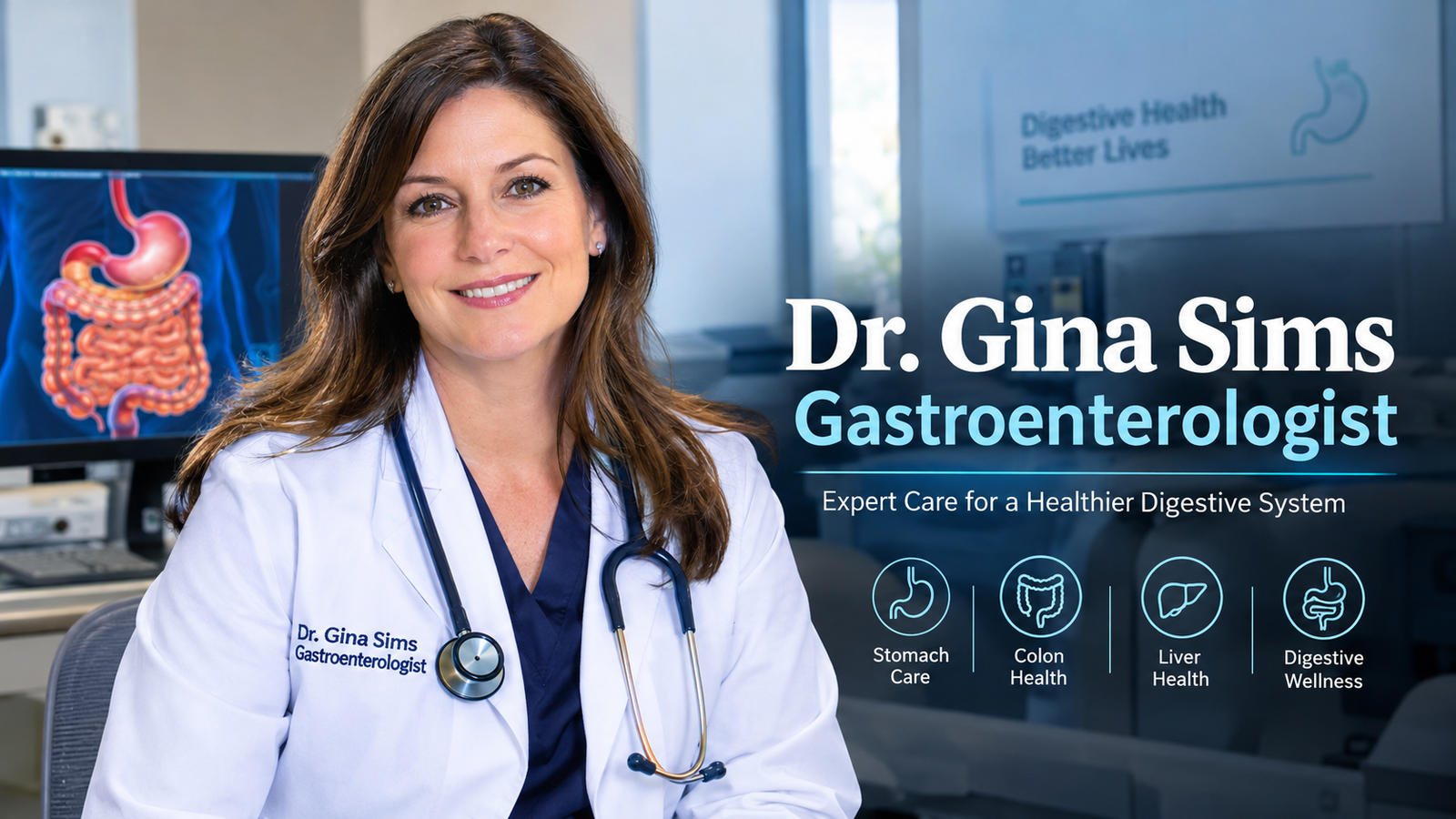
The search term Dr Gina Sims gastroenterologist appears to refer to Dr. Gina Sam, MD, MPH, a physician associated with gastroenterology and gastrointestinal motility disorders. However, the names should not be treated as interchangeable without confirmation, because established medical records identify the physician as Dr. Gina Sam rather than Dr. Gina Sims.
Dr. Gina Sam has a professional background in internal medicine and gastroenterology, with training at Tufts University School of Medicine, Lenox Hill Hospital, and NYU School of Medicine. Her clinical interests include digestive conditions that affect how food moves through the gastrointestinal tract, including chronic constipation and other motility disorders.
Understanding the name distinction, medical training, and areas of expertise can help readers find reliable information about the physician they are researching.
Who Is Dr. Gina Sims, the Gastroenterologist?
The name Dr. Gina Sims appears on websites describing a New York-based gastroenterologist. However, the professional biography presented on these websites contains details associated with Dr. Gina Sam, MD, MPH.
Dr. Gina Sam is the better-documented professional name in institutional medical records. She is a physician specializing in gastroenterology and internal medicine, with a particular interest in gastrointestinal motility.
Gastroenterology is the medical specialty concerned with the digestive system, including the esophagus, stomach, small intestine, large intestine, and related digestive organs. Gastroenterologists investigate symptoms such as persistent abdominal discomfort, changes in bowel habits, acid reflux, and unexplained digestive problems.
When searching for a specialist, patients should confirm the physician’s full professional name and current medical affiliation rather than relying exclusively on a website title or search keyword.
Medical Education and Professional Training
Dr. Gina Sam’s documented education and training provide useful background for people researching her professional qualifications.
Medical Degree from Tufts University
Dr. Sam earned her medical degree and a Master of Public Health from Tufts University School of Medicine in 2003. Medical education provides the foundation for understanding disease, diagnosing health conditions, and developing appropriate treatment plans.
Her public health qualification also reflects academic training in population health and the broader factors that influence health outcomes.
Internal Medicine Residency at Lenox Hill Hospital
After medical school, Dr. Sam completed residency training in internal medicine at Lenox Hill Hospital in New York City from 2003 to 2006.
Internal medicine training covers the prevention, diagnosis, and management of diseases affecting adults. It provides a foundation for subspecialties such as gastroenterology.
Gastroenterology Fellowship at NYU
Dr. Sam subsequently completed a gastroenterology fellowship at NYU School of Medicine from 2006 to 2009.
A gastroenterology fellowship provides specialized clinical training in digestive diseases, diagnostic procedures, and the long-term management of gastrointestinal conditions.
Her documented training helps explain her professional association with digestive health and gastrointestinal motility disorders.
What Digestive Conditions Are Associated With Dr. Gina Sam?
Dr. Gina Sam’s professional background is associated with the diagnosis and management of digestive health conditions, particularly gastrointestinal motility disorders. These disorders affect the movement of food, liquids, and waste through the digestive tract.
The conditions commonly associated with her area of specialization include the following.
Gastrointestinal Motility Disorders
Motility disorders occur when the muscles or nerves responsible for moving material through the digestive system do not function properly. Symptoms can include difficulty swallowing, abdominal discomfort, constipation, and problems with bowel movements.
Examples include gastroparesis, achalasia, and pelvic floor dyssynergia. Each condition requires an appropriate medical evaluation and may involve specialized diagnostic testing.
Irritable Bowel Syndrome
Irritable bowel syndrome, commonly known as IBS, is a digestive disorder that can cause abdominal pain, bloating, diarrhea, constipation, or alternating bowel habits.
Diagnosis generally involves reviewing symptoms, medical history, and relevant examination or testing findings. Treatment depends on the individual’s symptoms and may include dietary adjustments, lifestyle changes, and medication.
Chronic Constipation
Chronic constipation involves persistent difficulty passing stools or having bowel movements less frequently than usual. Some people also experience straining, discomfort, or a sensation of incomplete emptying.
Possible causes include dietary factors, medication effects, underlying medical conditions, and pelvic floor dysfunction. Persistent constipation may require further evaluation to identify its cause.
Acid Reflux and Gastroesophageal Reflux Disease
Acid reflux occurs when stomach contents move back into the esophagus. When reflux becomes persistent or causes troublesome symptoms, it may be diagnosed as gastroesophageal reflux disease, or GERD.
Common symptoms include heartburn, regurgitation, and discomfort after meals. Depending on the circumstances, management may involve lifestyle changes, medication, or diagnostic procedures.
Inflammatory Bowel Disease
Inflammatory bowel disease, or IBD, includes Crohn’s disease and ulcerative colitis. These chronic conditions involve inflammation of the digestive tract and can cause diarrhea, abdominal pain, fatigue, and other symptoms.
Evaluation may involve blood tests, stool tests, imaging, and endoscopic procedures. Treatment is tailored to the specific condition and its severity.
These are established gastrointestinal conditions, but their general association with a medical specialty should not be interpreted as confirmation that a particular physician currently treats every condition listed.
Professional Focus on Gastrointestinal Motility
Gastrointestinal motility is an important area of digestive medicine because symptoms can persist even when routine examinations do not reveal an obvious explanation.
Motility specialists investigate how the digestive tract moves food and waste and whether the muscles and nerves are coordinating properly.
How Motility Testing Works
Depending on the suspected disorder, a gastroenterologist may recommend tests such as esophageal manometry, anorectal manometry, or gastric emptying studies.
These procedures measure different aspects of digestive function. The appropriate test depends on the symptoms and the suspected diagnosis.
For example, anorectal manometry can help assess the function and coordination of the muscles involved in defecation. Gastric emptying studies can help determine whether food leaves the stomach more slowly than expected.
Not every patient needs specialized testing. A physician typically determines which investigations are appropriate after reviewing the patient’s symptoms and medical history.
How to Verify Dr. Gina Sam’s Credentials and Current Practice
People searching for Dr. Gina Sims gastroenterologist should confirm the physician’s identity before arranging an appointment.
The NYC Health + Hospitals physician directory lists Gina Sam, MD, under gastroenterology and internal medicine at NYC Health + Hospitals/Kings County in Brooklyn, New York. The directory also documents her medical education at Tufts University School of Medicine, residency at Lenox Hill Hospital, and gastroenterology fellowship at NYU School of Medicine.
A separate 2026 event listing from Guthrie identifies Gina Sam, MD, MPH, as a gastroenterologist participating in a colon cancer prevention and nutrition seminar. These institutional records support the professional identity and medical background of Dr. Gina Sam.
However, institutional listings and professional affiliations can change. Patients should verify current availability, appointment arrangements, insurance coverage, and the physician’s current practice directly with the relevant medical institution.
When evaluating any gastroenterologist, useful considerations include:
- Medical education and specialist training.
- Current professional licensing and board certification.
- Experience with the specific digestive condition being investigated.
- Availability of appropriate diagnostic services.
- Clear explanations of treatment options, risks, and follow-up care.
These steps can help patients make informed decisions when selecting a digestive health specialist.
Frequently Asked Questions
Is Dr. Gina Sims a real gastroenterologist?
The name appears on websites describing a gastroenterologist, but institutional medical records identify the physician with the matching educational background as Dr. Gina Sam, MD, MPH. The available evidence does not independently establish that Gina Sims is her official professional name.
What is Dr. Gina Sam known for?
Dr. Gina Sam is associated with gastroenterology, internal medicine, and gastrointestinal motility disorders. Her documented training includes a gastroenterology fellowship at NYU School of Medicine.
Where does Dr. Gina Sam practice?
NYC Health + Hospitals lists Dr. Gina Sam at Kings County Hospital in Brooklyn, New York. Because physician affiliations can change, patients should confirm her current practice location and appointment availability before visiting.
What is a gastrointestinal motility disorder?
A gastrointestinal motility disorder affects the normal movement of food or waste through the digestive system. Examples include gastroparesis, achalasia, and pelvic floor dyssynergia. Diagnosis depends on the symptoms and may require specialized testing.
When should someone see a gastroenterologist?
A person should consider seeing a gastroenterologist for persistent abdominal pain, ongoing changes in bowel habits, recurrent acid reflux, difficulty swallowing, or unexplained digestive symptoms. Blood in the stool, severe abdominal pain, or difficulty swallowing that prevents eating or drinking requires prompt medical assessment.
How can patients verify a gastroenterologist’s qualifications?
Patients can consult official hospital directories, relevant medical licensing boards, and recognized specialty certification organizations. They should also confirm the physician’s current clinical affiliation and experience with the condition they need evaluated.
Conclusion
The search term Dr Gina Sims gastroenterologist is closely associated with Dr. Gina Sam, MD, MPH, whose documented professional background includes training in internal medicine and gastroenterology. Her work is associated with digestive health and gastrointestinal motility disorders.
The most important distinction for readers is the physician’s verified professional identity. Checking institutional medical records and current practice information helps ensure that patients rely on accurate credentials when researching a gastroenterologist or considering digestive health care.
Also read: Wattios

1 Comment
Pingback: Valan Slap845 Old Version: Features, Compatibility, and Safety Guide