
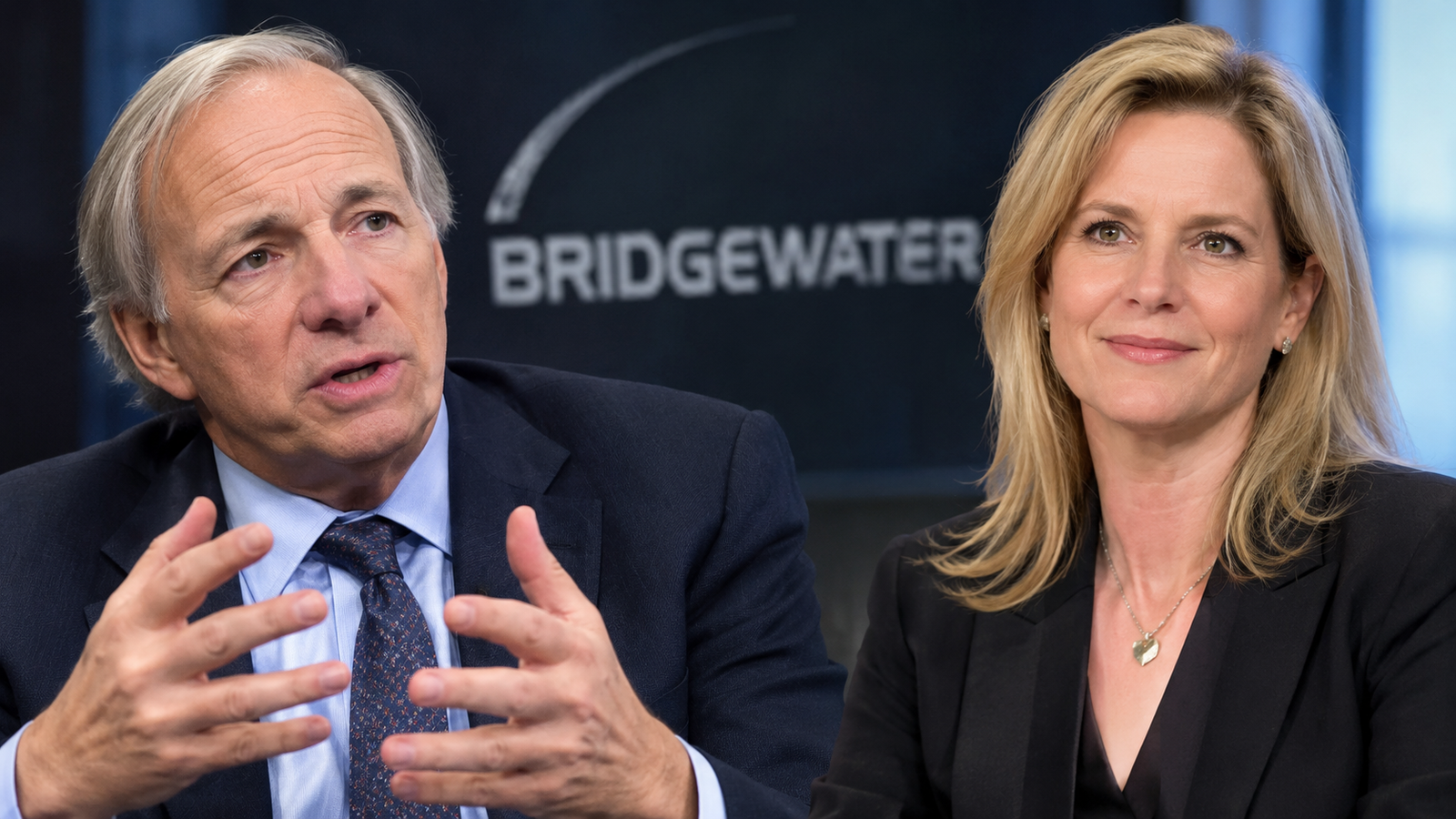
Ray Dalio and Patricia Poppe are prominent American business leaders known for their work in different industries. Ray Dalio is the billionaire investor who founded Bridgewater Associates, one of the world’s best-known hedge fund firms, while Patricia Poppe, also known as Patti Poppe, is the chief executive officer of PG&E Corporation, a major American energy utility company. Although their careers differ, both are recognized for their leadership, strategic decision-making, and efforts to improve organizational performance.
Understanding Ray Dalio and Patricia Poppe provides insight into two distinct approaches to business leadership: managing investments through economic analysis and risk assessment, and leading a large utility company focused on energy reliability, safety, and operational improvement.
Who Is Ray Dalio?
Ray Dalio is an American investor, entrepreneur, and author best known for founding Bridgewater Associates in 1975. He established the investment firm from his two-bedroom apartment and developed it into a major global investment management business.
Dalio became widely recognized for his approach to understanding financial markets, economic cycles, and risk. His investment philosophy emphasizes studying how economies work, examining historical patterns, and preparing for different market conditions rather than relying on predictions alone.
Throughout his career, Dalio served as Bridgewater’s chief executive officer, chief investment officer, and chairman. He stepped away from these leadership positions over several years as the firm transitioned to a new generation of leaders. His ongoing work has included mentoring, investing, philanthropy, and sharing his management principles.
Ray Dalio’s Investment Philosophy
Dalio is associated with systematic investing and strategies designed to manage risk across different economic environments. One of his best-known approaches is the All Weather strategy, which seeks to build portfolios that can perform across varying conditions, including economic growth, recession, inflation, and deflation.
His investment philosophy also emphasizes diversification, independent thinking, and learning from mistakes. Dalio has explained many of these ideas in his bestselling book, Principles: Life and Work, which explores decision-making, organizational culture, and personal development.
His influence extends beyond finance because his ideas about transparency, accountability, and evidence-based decisions have attracted interest from business leaders and investors worldwide.
Who Is Patricia Poppe?
Patricia Poppe, widely known as Patti Poppe, is an American business executive who became chief executive officer of PG&E Corporation in January 2021. She has built her career in the energy and industrial sectors, with experience in utility operations, engineering, customer service, and corporate management.
Before joining PG&E, Poppe served as president and CEO of CMS Energy and its principal subsidiary, Consumers Energy, in Michigan. Her earlier career included management positions at DTE Energy and General Motors, giving her experience in both the automotive and energy industries.
As CEO of PG&E Corporation, Poppe oversees a company responsible for providing energy services to millions of people across Northern and Central California. Her leadership responsibilities include improving operational performance, strengthening wildfire safety, maintaining reliable electricity service, and addressing customer concerns about energy affordability.
Patricia Poppe’s Leadership Approach
Poppe’s management approach emphasizes operational efficiency, workplace safety, customer experience, and organizational accountability. She has promoted lean business principles to reduce waste, improve processes, and help the company operate more effectively.
Her role is particularly challenging because California’s energy sector faces complex issues involving wildfire risks, infrastructure maintenance, environmental objectives, and the cost of electricity.
Unlike an investment manager who primarily evaluates financial markets and portfolio risks, Poppe must balance business performance with public safety, regulatory requirements, and the essential needs of energy customers.
Her experience demonstrates how leadership in a regulated utility industry requires both technical knowledge and the ability to manage large organizations through operational and financial challenges.
Ray Dalio and Patricia Poppe: Key Differences
Ray Dalio and Patricia Poppe operate in different business environments, but their careers provide useful examples of strategic leadership and long-term planning.
| Category | Ray Dalio | Patricia Poppe |
|---|---|---|
| Primary industry | Investment management and finance | Energy and utilities |
| Best known for | Founding Bridgewater Associates | Leading PG&E Corporation |
| Leadership focus | Investment strategy, economic analysis, and portfolio risk | Energy reliability, safety, and operational performance |
| Professional background | Investor, entrepreneur, and author | Engineer and corporate executive |
| Decision-making priorities | Market conditions, economic cycles, and investment returns | Customer needs, infrastructure, safety, and financial performance |
| Broader impact | Influence on institutional investing and economic thinking | Influence on utility operations and energy service delivery |
These differences reflect the responsibilities of their respective industries rather than a direct competition between the two individuals.
Dalio’s career centers on understanding financial markets and building investment systems. Poppe’s career centers on managing an essential service provider whose performance affects households, businesses, and communities.
What Ray Dalio and Patricia Poppe Have in Common
Despite their different professional backgrounds, several leadership themes connect Dalio and Poppe.
Strategic Decision-Making
Both leaders have held senior positions requiring decisions with significant long-term consequences. Dalio’s investment philosophy stresses examining evidence and understanding economic patterns. Poppe’s executive responsibilities require evaluating operational data, infrastructure needs, customer expectations, and safety risks.
Risk Management
Risk is central to both careers, although it takes different forms. For Dalio, it involves managing investment exposure and preparing for changing economic conditions. For Poppe, it includes operational hazards, wildfire threats, infrastructure reliability, regulatory compliance, and financial pressures.
Their careers illustrate why identifying risks early and preparing for different scenarios are important elements of effective management.
Organizational Improvement
Dalio became known for developing a distinctive workplace culture built around principles, transparency, and structured decision-making. Poppe has emphasized lean operating practices and efforts to improve efficiency and customer service.
Both approaches seek to make organizations more effective, although they are designed for different business objectives.
The Business and Economic Impact of Their Work
Ray Dalio has influenced how institutional investors think about diversification, economic cycles, and portfolio construction. His writing has also introduced a broad audience to concepts involving debt, monetary systems, and changes in the global economic order.
His ideas are particularly relevant to investors seeking to understand how inflation, interest rates, government borrowing, and economic downturns can affect financial markets.
Patricia Poppe’s impact is more directly connected to the delivery of essential energy services. PG&E operates within a heavily regulated environment where management decisions can affect energy reliability, operating costs, infrastructure investment, and public safety.
Her leadership also highlights the difficulty of balancing cleaner energy goals with affordability and dependable service.
Neither career offers a universal model for every organization. Dalio’s investment principles are most directly relevant to finance and strategic decision-making, while Poppe’s experience offers lessons for utility management, operational improvement, and leadership in regulated industries.
Frequently Asked Questions
Who are Ray Dalio and Patricia Poppe?
Ray Dalio is an American investor who founded Bridgewater Associates in 1975. Patricia Poppe, also known as Patti Poppe, is an American business executive and CEO of PG&E Corporation.
Are Ray Dalio and Patricia Poppe business partners?
There is no widely established public evidence that Ray Dalio and Patricia Poppe are business partners. They are known for their separate careers in investment management and the energy industry.
What is Ray Dalio best known for?
Dalio is best known for founding Bridgewater Associates, developing investment approaches such as All Weather, and writing books about investing, economics, and decision-making, including Principles: Life and Work.
What is Patricia Poppe known for?
Poppe is known for leading PG&E Corporation and for her previous role as president and CEO of CMS Energy and Consumers Energy. Her work has focused on utility operations, safety, efficiency, and customer service.
How do Ray Dalio and Patricia Poppe differ as leaders?
Dalio focuses on investment strategy, economic analysis, and financial risk management. Poppe focuses on energy operations, infrastructure reliability, public safety, and customer needs. Their leadership responsibilities reflect the different demands of their industries.
What leadership lessons can be learned from Ray Dalio and Patricia Poppe?
Their careers highlight the importance of evidence-based decisions, risk awareness, continuous improvement, and long-term planning. They also demonstrate that effective leadership requires adapting management practices to an organization’s goals and operating environment.
Conclusion
Ray Dalio and Patricia Poppe represent two distinct forms of business leadership. Dalio built his reputation through investment management, economic analysis, and the development of systematic decision-making principles. Poppe has established her career through industrial and utility management, with an emphasis on safety, efficiency, and reliable energy services.
Although their professional paths are different, both demonstrate the importance of strategic thinking, risk management, and organizational improvement. Their careers offer valuable lessons for investors, business professionals, and readers interested in understanding how leadership operates across different industries.
Also read: BotPower

1 Comment
Pingback: Quantumrun: Features, Benefits, and How It Works